Medical EducationTips for using poetry in medical education
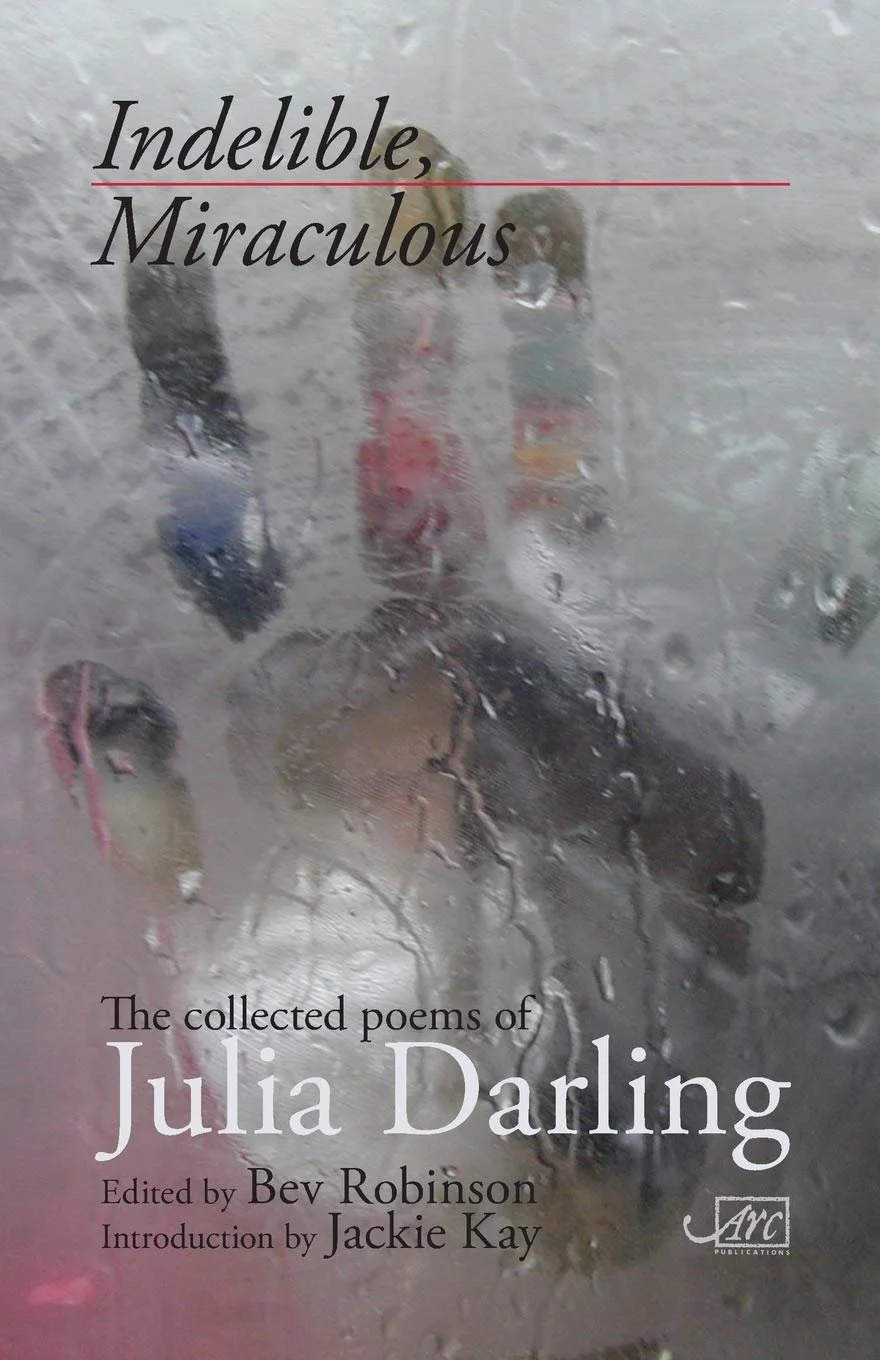
introduction‘I believe that poetry can help make you better. Poetry is essential not a frill or a nicety. It comes to all of us when we most need it. As soon as we are in any kind of crisis, or anguish that is when we reach out for poetry or find ourselves writing a poem for the first time.’
These are the words of Julia Darling writing in the Guardian.
People often say that poetry is not for them, that it is inaccessible and confusing, but in moments of joy, sadness and utter desolation it is poetry that we use to express our emotions and make sense of our world.
Poetry is read and heard at celebrations and memorials of our most significant life events – weddings, births, deaths and tragedies.
We write poetry as a cathartic process to find meaning in our lives.
When we read poetry we discover that there are other people in the world whose experience mirrors our own.
Deb Alma, at her Poetry Pharmacydispenses poetry to help cure our ills, heal our bodies, sooth our minds and bring us joy.
I use poetry in my teaching because it is a tool to explore life, what it is to be human, and how we can focus on relationship-based care in medicine. Poetry helps us consider the breath of the human experience, the awe and wonder, the complexity and uncertainty, and the sadness and the suffering.
On this page there are not many poems, as they can be found scattered throughout the other pages of this website. On this page I share some suggestions for using poetry in medical education.
I regularly used these teaching suggestions and selected poems with learners. I have found them to be effective. The poems are familiar to me. I think it is important to use resources that you feel comfortable with and can share with confidence.
Usually, I simply read the words of the poem aloud to the group. On other occasions it feels important for learners to see and hear the poem, so I project the words on a screen or share paper copies of the poem. Sometimes, I invite someone in the group to read the poem aloud so it is heard again. There are some poems that lend themselves to be read out loud in unison, (e.g. Lem Sissey’s Making a Difference) or read one line at a time by passing the book around the room. (e.g. Michel Rosen’s These are the Hands) Poetry can be serious stuff, but it is good to involve the group, be playful and to experiment.
There are poems where I encourage the learner to notice individual words and phrases. But usually, I suggest they let the poem wash over them, notice how it makes them feel and explore what meaning they find.
This is a lovely blog about using poetry.
Here are the ways in which I have used poetry with learners.
All the poems marked with * are available to read in a great teaching resource, ‘These are the Hands- Poems from the Heart of the NHS’
Getting to know your learner
You might invite your learner to share a poem that is important to them, maybe something from childhood, school, their culture or a significant life event.
It is important that you share your choice too, so there is a level learning environment and the learner gets to know you.
My choices are:
Halfway Down the Stairs, A. A. Milne
The Four Quartets, T. S. Eliot (the opening passages)
Questions for learners:
· Why have you chosen to share this particular poem?
· Do you think it might have a different meaning for someone else?
Exploring being human
Any of Shakespeare’s lines would help you explore what it means to be human.
The Seven Ages of Man, from As you like it, sets the scene for a discussion about the care the NHS provides from ‘cradle to grave’.
Questions for learners
· What do you think this excerpt from Shakespeare teach us about being human?
· Have you ever used poetry to help you make sense of a life event?
Discussing our work in medicine
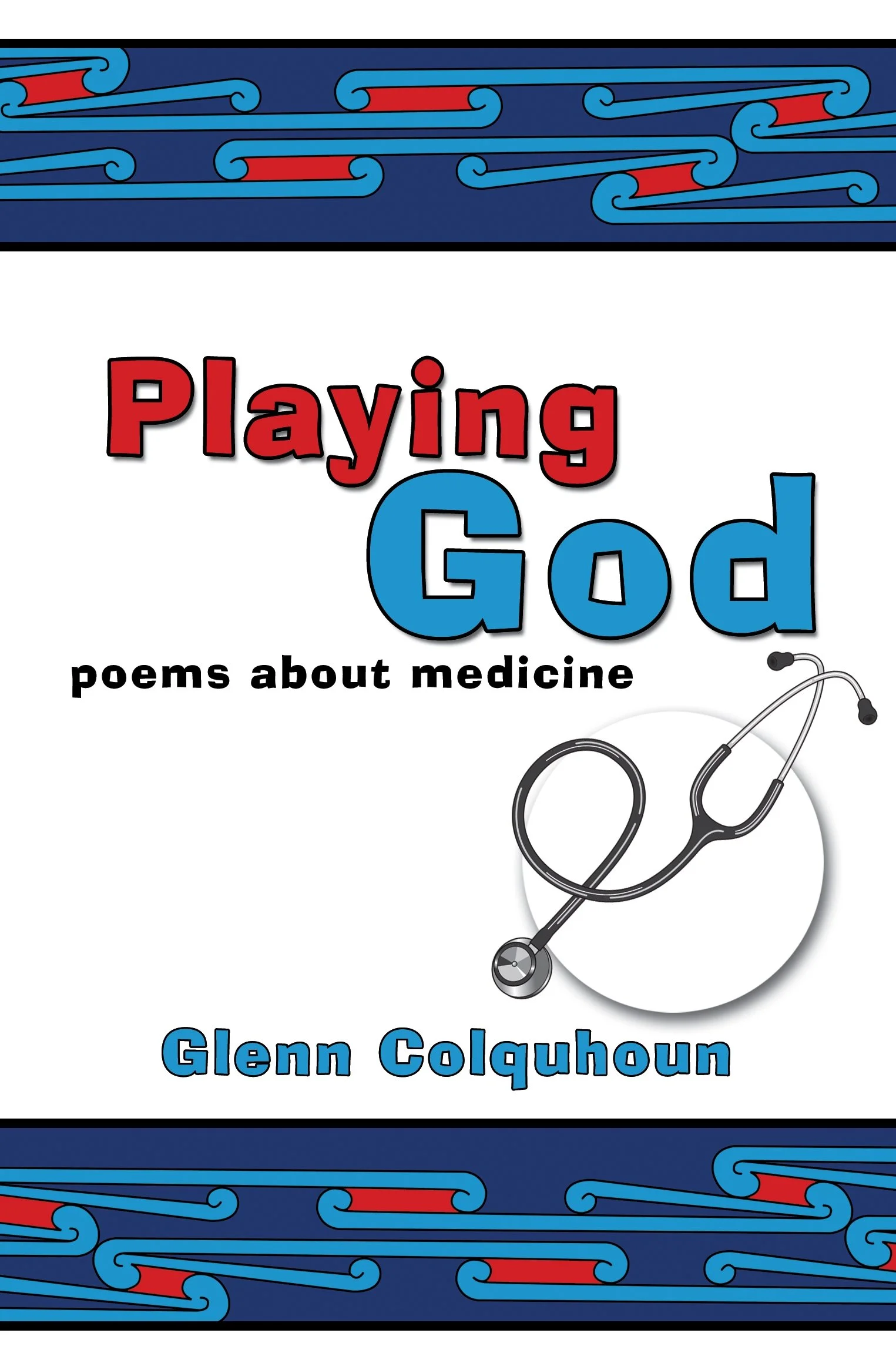
My favourite poetry collection to reflect on our work in medicine is ‘Playing God – poems about medicine’ by Glen Colquoun.
There is a wonderful poem in this collection called ‘Today I do not want to be a doctor’. You can read it on the ‘Practising Medicine’ page.
GP, Emma Storr’s poem, Six Week Check*, is very effective in teaching about relationship-based care and the intimate and practical aspects of the doctors’s role.
Questions for learners
· What aspects of being a doctor do you like, and why (or don’t you like)?
· How does it feel to carry out an intimate examination on another human being?
Considering how we use words in medical care
Rachel McCoubrie’s The D-words*, about death, dying, and the dead helps learners to consider how often we avoid clear language when communicating with patients and colleagues about complex and difficult life events.
(Even with a reference to Jimmy Saville, the poem is still a wonderful teaching resource- in fact that reference can take the discussion off at a useful tangent. The last group with whom I used this poem with had not heard of Jimmy Saville. Whereas someone in a different group had worked at the hospital where many of his crimes were committed. I’ve no idea what you, the reader know about his story. It made me reflect we should not assume our learners will understand reference to people and events in art or the media.)
Questions for learners
What words, phrases or euphemisms do you use when talking to patients and their loved ones about dying and death?
Why might clinicians avoid the ‘d-words’?
Seeing the patient perspective of illness
Julia Darling wrote her poems to help doctors understand the patient’s perspective of illness. Her words are profound and important, none more so that those written in her poem Too Heavy*.
Questions for learn
Are you always aware of the ‘heavy words’ you use with patients, and do you check out your patient has understood them.
Can you explain these heavy words in plain English?
Reflecting on experience (creative enquiry)
Invite your learner to create a response to their work in medicine (or life outside medicine)by writing a poem, or Haiku.
This might be an exercise with time restrictions at the end of a teaching session/workshop, or something for the learner to reflect on and create between teaching sessions/tutorials.
Remind them that a poem is simply a collection of words. A few carefully selected words can be just as effective at conveying meaning as a long critically acclaimed article or novel.
Invite them to try a limerick, a Haiku or a mesostic.
I’m always amazed by what is created and I always discover something more about the person; what they have learnt from the workshop and how they experience working in medicine. You will find examples of student and doctor created art throughout this site. Here are two examples.
A Haiku written after a Creative Health SIG Away Day (2026)
The GP Window . A Haiku
For GPs who like to look at the sky during their working day)
Think Decide Prescribe
The sky infinite, changing
Permission to feel
By David Hopes, GP and Educator in Plymouth
And this poem by Jasmin, a year 2 student at Hull York Medical School undertaking a student selected project exploring how the role of the doctor is portrayed in art.
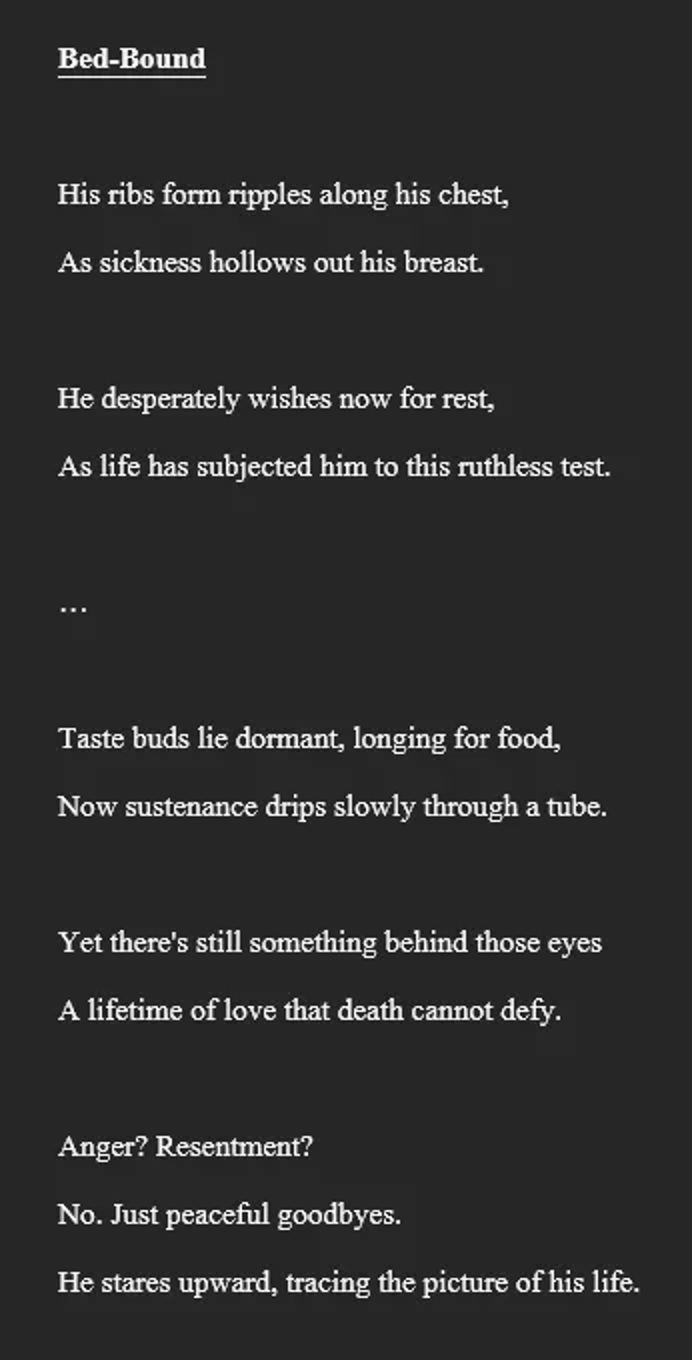
Bed-Bound, Jasmin (2026)
Having fun with poetry
There are lots of ways poetry can be used in workshops to facilitate team building or as a catalyst for talking about what matters to people in work and life.
Take a look at the page on uncertainty to read about how I use postcard pictures to explore uncertainty and ambiguity in medicine, and invite learners to develop their skills of observation, description and curiosity by writing ‘flash fiction’ or short poems about the scenes in the postcards.
This next exercise requires some quiet personal time and space and uses some else’s words.
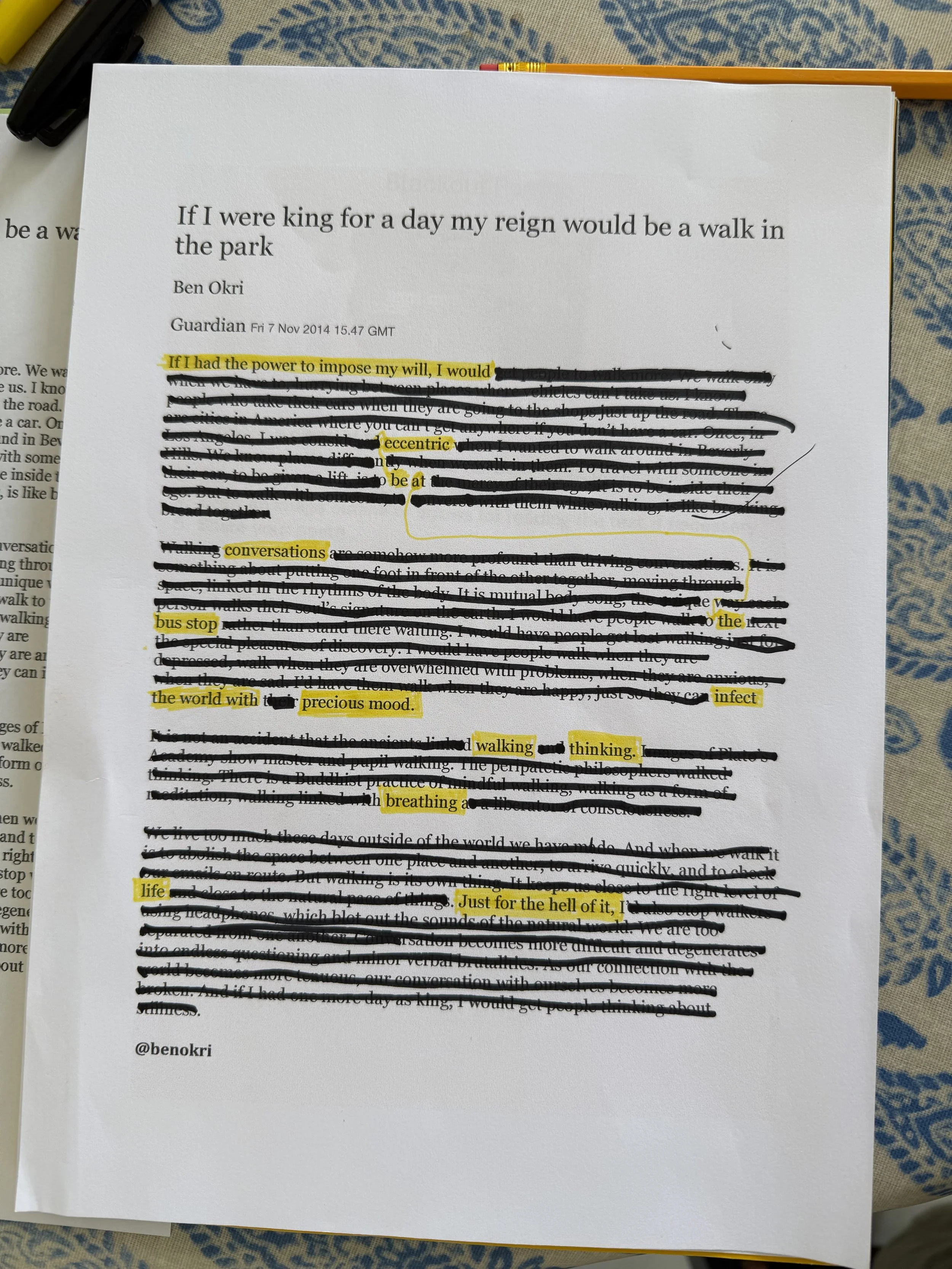
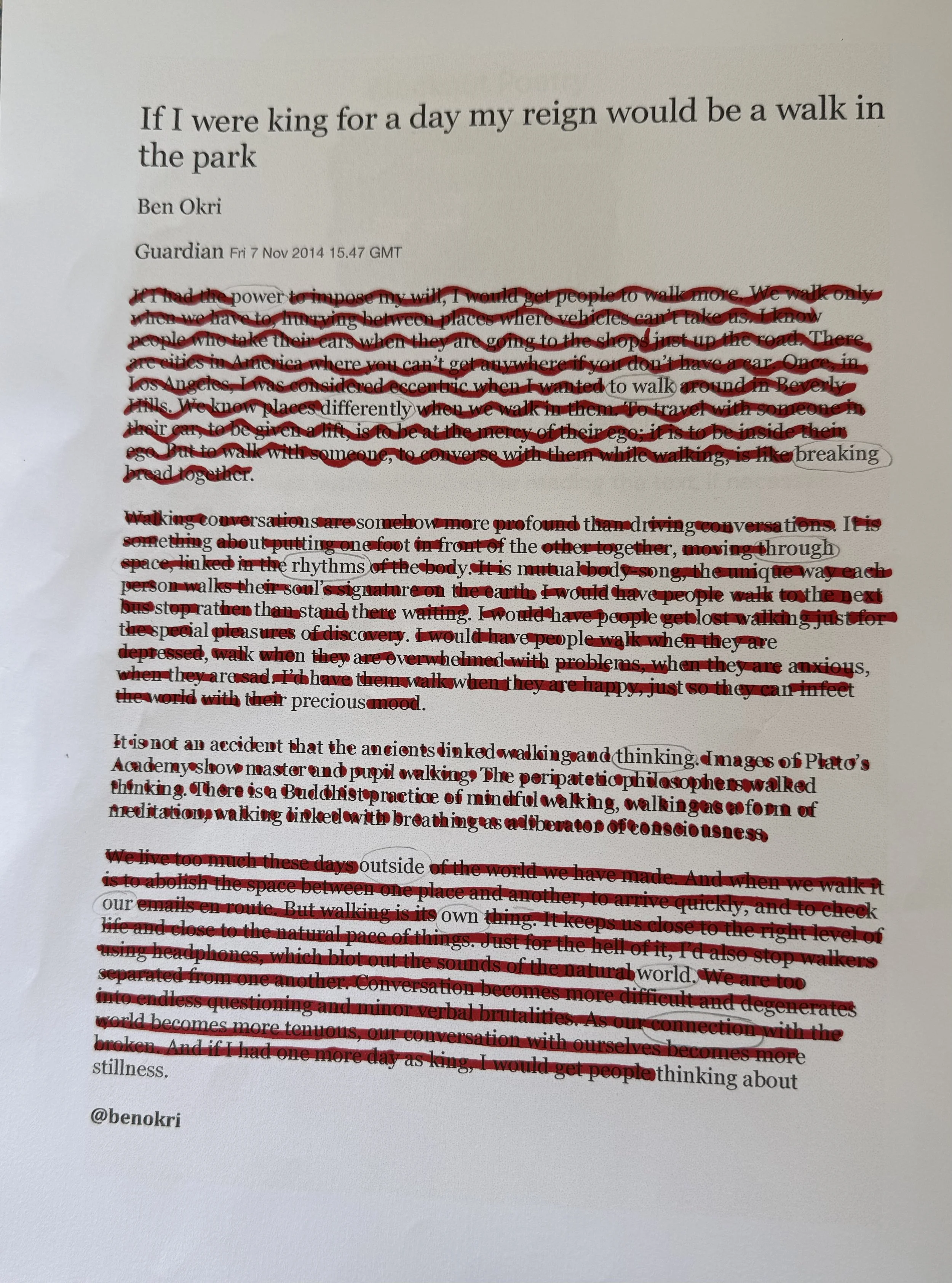
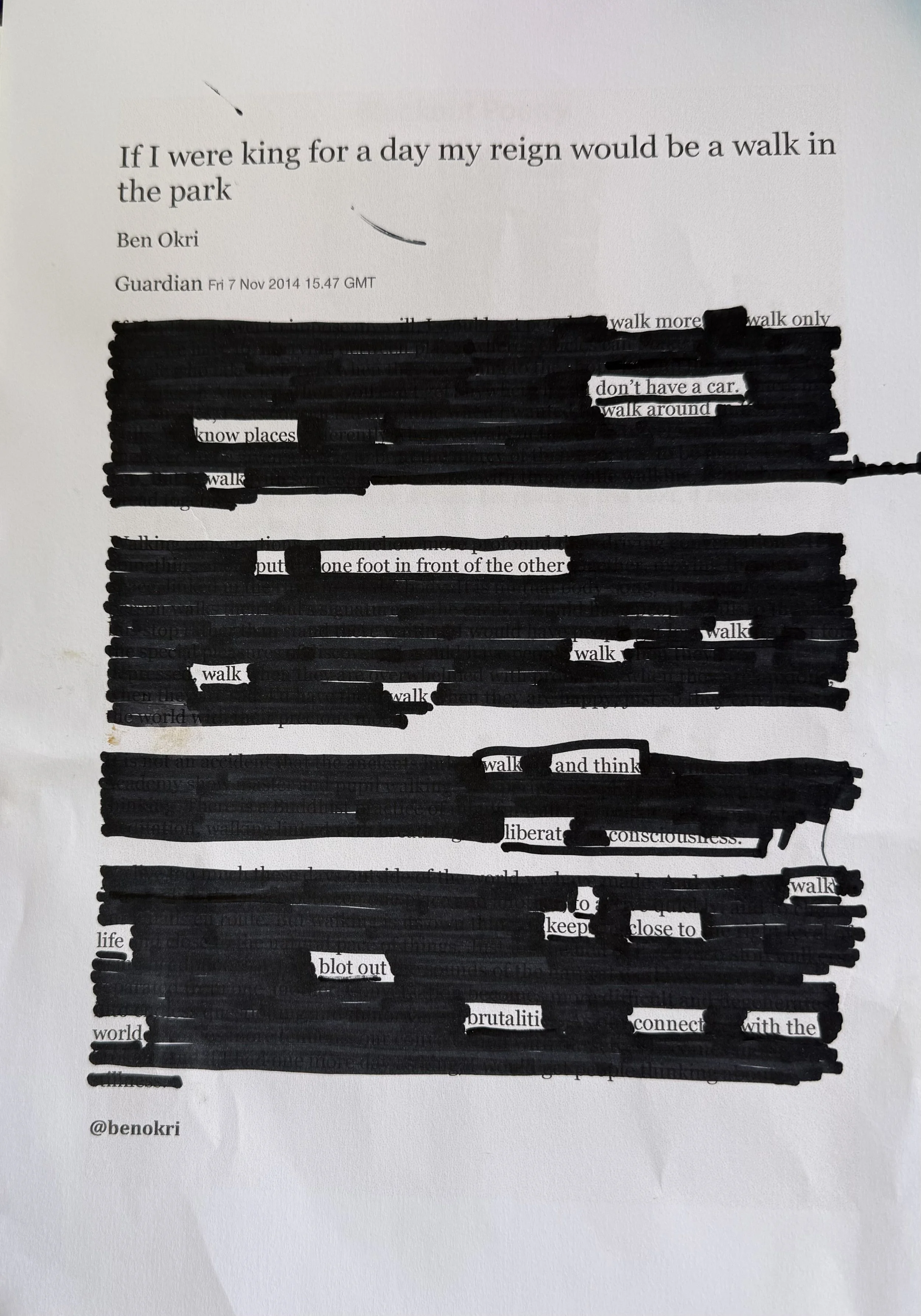
Blackout Poetry
This is what you do.
Choose a piece of text
In pencil circle the meaningful words, images, phrases, and ideas.
Identify the text you want to blackout.
Black it out
If needed draw an image outline or arrows for reading the text.
Share your poem, visually or by reading it outloud.
Here is an example of how it works in practice.
I love using the wisdom of Ben Okri in my teaching. The piece, If I were King for a Day, written in the Guardian has set the scene for several seminars at Yorkshire Sculpture Park and I’ve used the text to create blackout poetry.
These blackout poems were created at a summer retreat in a garden for GPs from South Yorkshire involved in the Primary Care Together Programme supported by South Yorkshire Primary Care Workforce & Training Hub
-
![]()
Important words
June 2026
-
![]()
A reflective poem
June 2026
-
![]()
An instructive poem
21st May 2025
FInal ThoughtsIf your learners ask, “what is a poem is and what does it do?”.
You could read them this poem by R S Thomas,
Don’t Ask Me
Don’t ask me;
I have no recipe
for a poem. You
know the language,
.
know where prose ends
and poetry begins.
There should be no
introit into a poem.
.
The listener should come
to and realise
verse has been going on
for some time. Let
.
there be no coughing,
no sighing. Poetry
is a spell woven
by consonants and vowels
.
in the absence of logic.
Ask no rhyme
of a poem, only
that it keep faith
.
with life’s rhythm.
Language will trick
you if it can.
Syntax is words’
.
way of shackling
the spirit. Poetry is that
which arrives at the intellect
by way of the heart.
prompt Now it’s your turn…
How have you used poetry in your learning, teaching or personal life?
Has it been helpful?
Are there any poems you would like to share with others through this site?
You can message me on the ‘contact me page’.
Anthologies mentioned on this page